Today is the last day you can watch @LawrenceMooney's #Moonman on #ABCTV #ABCIVIEW. Here's a #ComedyShowroom link
Showing posts with label neighbours. Show all posts
Showing posts with label neighbours. Show all posts
Monday, 13 June 2016

Saturday, 11 June 2016
Lawrence Mooney - ABC Comedy Showroom: MOONMAN
There are only four days left to watch LawrenceMooney's new comedy pilot, Moonman from ABC on ABCIVIEW. Here's the ComedyShowroom link if you missed it: MOONMAN
It also stars Ian Smith - best know from Neighbours, playing a hilarious parody of himself that is a must see for all Neighbours fans past and present.
Here are some reviews:

Sydney Morning Herald
From the Sydney Morning Herald Review by Debi Enker:
The standouts are The Letdown and Moonman (1 June). Written by Sarah Scheller with Alison Bell and starring Bell (Laid) as Audrey, the rattled, sleep-deprived mother of 12-week-old baby Stevie, The Letdown takes an unsentimental look at parenthood, rejecting a reassuring soft focus but not surrendering its heart in the process. It surveys a messy scene, from the sometimes competitive and judgmental spirit of mothers' – sorry, parents' – groups, to the pressure of expectations, the dampening effect on marital sex and the disappearance of kind of a social life that was once taken for granted. Director Trent O'Donnell (The Moodys, No Activity) keeps the pace lively and the pitch-perfect cast includes Noni Hazlehurst as a seen-it-all-before infant welfare nurse, Ewen Leslie as Audrey's beleaguered husband and Patrick Brammall, hilarious as a local drug dealer.
Written by Scott Taylor and starring Lawrence Mooney as Lawrence Mooney, Moonman is loosely based on the life of the comedian, with the title character an ornery radio host overseeing the graveyard shift at Soft-FM. He's a loudmouth who drinks too much, rubs people the wrong way and gets himself into trouble. Mooney specialises in a brand of abrasive humour andMoonman offers a happy shot of it, notably in his blasts on topics such as taxis and the music of Phil Collins. But in addition to displaying the sharpness of Mooney's wit, Moonman, which is directed with flair by Clayton Jacobson (Kenny), creates a richly nuanced world with a lot of charm and allows space for a gentler style of comedy to emerge. Neighbours stalwart Ian Smith cuts loose as a fellow broadcaster, Elise Jansen is beautifully cast as Mooney's clear-eyed girlfriend and Blessing Mokgohloa is terrific as Mooney's food-truck owner confidant.
And from the Saturday Paper, written by Helen Razer

And here's some pictures from the show and behind the scenes.


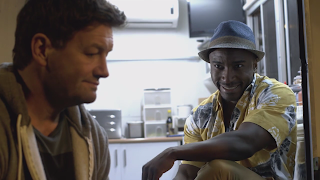


Behind the scenes:


It also stars Ian Smith - best know from Neighbours, playing a hilarious parody of himself that is a must see for all Neighbours fans past and present.
Here are some reviews:

HeraldSun
Sydney Morning Herald
From the Sydney Morning Herald Review by Debi Enker:
The standouts are The Letdown and Moonman (1 June). Written by Sarah Scheller with Alison Bell and starring Bell (Laid) as Audrey, the rattled, sleep-deprived mother of 12-week-old baby Stevie, The Letdown takes an unsentimental look at parenthood, rejecting a reassuring soft focus but not surrendering its heart in the process. It surveys a messy scene, from the sometimes competitive and judgmental spirit of mothers' – sorry, parents' – groups, to the pressure of expectations, the dampening effect on marital sex and the disappearance of kind of a social life that was once taken for granted. Director Trent O'Donnell (The Moodys, No Activity) keeps the pace lively and the pitch-perfect cast includes Noni Hazlehurst as a seen-it-all-before infant welfare nurse, Ewen Leslie as Audrey's beleaguered husband and Patrick Brammall, hilarious as a local drug dealer.
Written by Scott Taylor and starring Lawrence Mooney as Lawrence Mooney, Moonman is loosely based on the life of the comedian, with the title character an ornery radio host overseeing the graveyard shift at Soft-FM. He's a loudmouth who drinks too much, rubs people the wrong way and gets himself into trouble. Mooney specialises in a brand of abrasive humour andMoonman offers a happy shot of it, notably in his blasts on topics such as taxis and the music of Phil Collins. But in addition to displaying the sharpness of Mooney's wit, Moonman, which is directed with flair by Clayton Jacobson (Kenny), creates a richly nuanced world with a lot of charm and allows space for a gentler style of comedy to emerge. Neighbours stalwart Ian Smith cuts loose as a fellow broadcaster, Elise Jansen is beautifully cast as Mooney's clear-eyed girlfriend and Blessing Mokgohloa is terrific as Mooney's food-truck owner confidant.
And from the Saturday Paper, written by Helen Razer

And here's some pictures from the show and behind the scenes.


Behind the scenes:

Jojo's Kebab Van

Clayton Jacobson, our director, storyboarding a scene.

Ian Smith and his new girlfriend

The infamous park scene

Watching the shoot

The first day on set for the Moonman

Our talented cast

Late night shoot in Collingwood
Now watch the show on iview until June 14th, 2016 - SEE IT HERE
Tuesday, 14 October 2014
The Day I lost My Mind


I had recently taken over the script department and my good friend Ray Kolle came up with an idea to help revive the show - re-introduce a number of former characters including the much loved Harold Bishop.
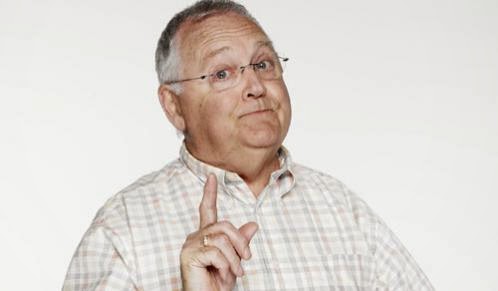
My first reaction was - Isn't he dead? The answer was yes and no. He had died, been mourned and forgotten many years before on the show, but where television is concerned if the body isn't found the death isn't forever. In TV land that means Harold could still be alive, but it would be my job to explain how.
In the original story Harold had been swept out to sea off the south coast of Australia. His only remains, a pair of glasses in a shallow rock pool found by his teary wife, Madge.
My job was to find a story that explained how Harold survived. Easy - he drifted across one of the most treacherous seas in the world, Bass Strait, then was picked up by a fishing boat. It was never stated, but I imagine Japanese whalers mistook him for a humpback. Then I had to explain how and why he remained quiet about his survival for the best part of half a decade.
For this I pulled out the equivalent of 'storytelling' liquid paper and gave Harold amnesia - easy peasy - job done. He was taken in by the salvation army, joined their marching band and eventually came back to the mainland as the back up tuba player in the Salvation Army marching band with no memory of his former life.

Amnesia is almost the worst way to undo a story on TV. It is second only to waking up from a dream and telling your audience nothing they've just invested in actually happened.
The famous and undisputed worst storyline ever -
Bobby's death in Dallas was just a dream.
Amnesia is so widely criticised as a plot twist because the number of cases are very small and therefore the 'amnesia' excuse is wildly implausible.
So imagine my surprise when on June twenty five this year I headed to the gym before work and then quietly lost my mind.

The only thing that made them hesitate was that I seemed fine except for a memory like a gold fish. My mind was on a loop that re-set every few seconds, retaining nothing but my name and age.
After many hours my memory began to retain longer 'loops' and a neurologist was called and diagnosed Global Transient Amnesia, (GTA).
Harold Bishop had just ridden back into my life on a horse called Karma!

The first thing I remember was my sister thrusting a piece of paper into my hand with a list of answers to questions I wanted to ask. She seemed in that moment psychic - how could she possibly know I wanted answers to exactly those questions? That was the start of the weirdest four hours of my life, but only because I couldn't remember the previous six.
As my memory slowly came back the rest of my family arrived, my boyfriend, my mother, then a long line of interested doctors and nurses. Everyone seemed to be happy and relieved. I was just confused.

I was wheeled through what looked like a cafe, a unique experience for patients at the Epworth, although most are wheeled from surgery to ward while still under anaesthetic. I wasn't. My mind was still not my own, but it made enough sense to realise being wheeled through a cafe in a backless gown in a bed was unusual, so I gave the royal wave to those looking on as I went by.
I was placed in a ward and minutes or hours later, it was still hard to tell, my family left and I was alone and told again what had happened by doctors and nurses. They tried to assure me it wasn't going to be permanent, it wasn't likely to reoccur and it couldn't be explained. They were very worried I would freak out as my mind caught up to me. I wasn't at all fussed, but only because I couldn't remember any of it. For me it simply didn't happen and I think that was the best thing. It meant everyone else worried and I simply moved on.
 At around ten O'clock I remember looking at the others in the ward. There were three and I knew them all, but couldn't place from where. It turns out I knew them from hours before and it was explained again what had happened and my deja vu moments were older memories slowly being retained.
A few times during the night the nurse woke me to take vital signs and make sure the diagnosis was correct and not the still remote chance of something more serious. I had to wait until the next day to have an MRI because they worried putting me into that small confined space while my memory was still scattered may cause me to panic if I forgot where I was.
I sort of slept, or at very least forgot the night and by early morning I was pretty much back to normal and able to chat to my ward-mates. They had all been in for operations and were heavily drugged up the night before, but still told me I had seemed 'pretty out of it' when I was brought in. It slowly dawned on me just how close to disaster I'd come. My brain had done the equivalent of a reset and now, mercilessly, had started back up with everything working.
I had my MRI mid morning and the neurologist explained they had found a small white dot on my brain that was exactly what they were looking for and the only sign of a GTA episode. The dot would fade over the next few weeks and he again reassured me there would be no residual affect and only a twenty percent chance of it ever happening again.

It was then that I first really came to terms with what had happened and I looked at my phone's history trying to find those missing hours. In those lost first forty minutes I had made over twenty calls. It was eerie to look at the list and not have any memory of any of those calls. The calls were to work, my boyfriend, my mother and sister.
I am told I was lost and scared. Stroke was diagnosed early and my mother later told me I asked her in a very scared voice, "What is happening to me?" My work supervisor took five calls from me, all identical. It took him three calls before he realised I had a serious problem and he told me to find someone and get help. Then I rang him again to tell him I would be late for work and he told me very clearly not to hang up the phone and he talked me to the nearest shop and instructed me to hand the phone over to the shop assistant. That's when medical help was called.

Even while I was waiting for that help I called my work supervisor again to tell him I would be late for work.
We laughed about it later, but I will always feel lucky someone with enough sense and a calm head was on the other end of that phone. If I could remember any of it I would probably be embarrassed and far more scared about the whole thing, but that's the one benefit of having your memory wiped like an Etch-a-Sketch.
I know my boyfriend freaked out on the second call I made to him, but he was smart enough to send out the call for help and it was my sister who found out where I was and dropped everything to come to me.
The literature on GTA indicates stress and exhaustion as a major cause. Four days earlier I met with the top executives of one of our TV networks about a new TV show I have created and am writing. It was our second meeting since the initial green light had been given in February and the first since they'd had the new drafts of the scripts. It was the meeting that would determine the entire development process of the show, many of the production details and my ongoing hope to be the primary writer and story producer. The meeting went extraordinarily well, but the pressure and work leading up to it had been extreme - especially as I was holding down a full time 'real world' job alongside all that added work and stress on the TV project.

Triggers to GTA are thought to be: a sudden immersion in cold or hot water, strenuous physical activity, sexual intercourse, medical procedures, such as angiography or endoscopy, mild head trauma, acute emotional distress as might be provoked by bad news, conflict or overwork.
Sadly my bout wasn't brought on by sex, but I had just been to the gym, came from a warm environment to my push bike in the middle of winter and had the overwork and stress well and truly covered.

I worried for a short time about it happening again or about part of my mind being impaired in some way, but days later I redrafted a script that has since stood up to network scrutiny, so that fear seems to be baseless.
Four days after the episode I was back driving a public transport bus which is how I've been paying my mortgage for the last eighteen months.
I am very close to blogging the full story of my new show if anyone's interested in how you create and then sell a TV show to a network. Special interest for anyone who wants to do this while driving a public transport bus - although that last step isn't something I would recommend of wish on anyone!

That's the story of how I lost my mind. I'm so thankful to family and friends who came to my rescue when I was unable to look after myself. It also reminded me of how fragile we really are. I'm just thankful, this time, it wasn't more serious.
And just like a bout of amnesia in an ongoing series, I will quickly move on and never speak of it again.

Monday, 20 August 2012
The Australian Film and TV industry
I recently had a screenplay listed as a semifinalist in the PAGE 2012 International Screenplay awards. I have had to withdraw my entry because I either misread the rules or failed to read them at all. To confess, I have entered a number of competitions before, some with success, and I guess I got a little casual about entering assuming the better known competitions like PAGE were similar to Scriptapalooza in their eligibility requirements. They aren't and it's a lesson I've learnt.

It is, like many others, a competition of vital importance because it gives new writers an opportunity to break through with a great idea and a well written script.
I wish we had something similar in Australia.
Most of our Film and TV projects are funded in part or in whole by government funding bodies. That's our industry - that's how it works. And the people who judge and grant these funds to projects try to select work that is, firstly - a high standard, secondly - worthy of funding in story, social commentary and cultural significance.
The result is a lot of wonderful films and very few commercial successes. It seems most people would rather watch something that entertains through adventure, suspense, inspiration or laughter than witness of depressing slice of life, a dark or tragic recreation of a true story or a story that meanders slowly around in depth character studies. It's the 'Arthouse Vs Commercial' debate. Is it more important to produce 'The Piano' than 'Dumb and Dumber'?
So where are our commercial writers? Where are the extraordinary new voices? And why has making films and television in Australia lost any comparison to being a business? Have we ignored the idea that entertaining people and attracting the largest audience possible should be the first entry at the top of those very worthwhile list of criteria objectives?
I can only go on my own personal experience to explain why there are not more success stories coming from the hundreds of trained writers being graduated every year from very reputable writing courses around this country.
Over a fifteen year career as a writer I have won an Australian Writer's Guild award for theatre. I have been nominated for another for serial drama. I have been script producer of Neighbours for two years, Senior story editor on Home and Away for another two years. I have set up drama shows for Fremantlemedia in Indonesia, Poland and Russia and worked in their London office in world wide drama development. I have story edited over 500 hours of produced television drama, I have edited over 200 hours of produced television drama and personally written around 30 hours of produced television serial drama.
The Australian film and television funding bodies don't consider I have gained enough experience as a writer to apply for funding towards a film or TV project that I have written and created.

To put this into context, imagine if the patent office changed their rules and stated that in order for any inventor to APPLY for a patent for their newly thought up and created invention, they had to sign over all their rights to that invention to a manufacturer with the means and experience to make the invention.
That would be outrageous. Anyone can see such a thing would be totally unfair to the inventor and unjust. That inventor may have spent years working out how to make the new product work perfectly and now they have, they are being asked to sign away their rights just to submit it for an application for a patent. It is a ludicrous idea and would never be allowed to happen - right?

In Australia, I and any writer who doesn't qualify under their strict standards as an 'eligible writer' must option their rights to the project to a producer of appropriate standing and then have that producer apply for funding, under their name, towards getting project funding.
Imagine you've been working on a screenplay or TV concept for years. It's now ready to go forward, but just to apply to receive funding you have to sign over your rights, usually for two years, to a producer. Then if the funding isn't granted - and only about 10% of submissions do get funding - the producer retains the rights to your project and you cannot submit it or take it to anyone else until those rights lapse, because you no longer own the rights to your own unfunded project.
What if you've written something incredibly time sensitive around current topical trends or fashions? Now the project is sitting in someone else's drawer and the chances of it being the original voice on a subject when you finally get your rights back are unlikely, in fact, the timing for such an idea may have passed by completely.

I don't see why each of the funding bodies, either individually for their state or in combination with the Australian federal funding body, making it nationwide, can't run competitions or at least a single competition like Scriptapalooza or PAGE or the Nichols Award - for any writer who falls outside their 'suitable experience' criteria.
Combine resources between all the funding bodies, making it state based with finalists being forwarded to a final from all states and create one large competition that would pay for itself through entry fee and feedback services. Part of the package for winners would be exposure to funding body readers and possibly even development funding. Certainly granting funding, 'provided' a suitable producer is found - would give a writers at least some clout to choose a producer and have them take the project on, given there is a guarantee of funding when they did.
 I am sure the administrations, both state and federal, will argue it is in the 'too hard' basket. But many very worthy Australian writers have their careers in that basket at the moment so it's worth trying whatever can be done to change that. Crying, 'too hard' or arguing amongst separate bodies seems petty and short sighted. Such a competition would allow great ideas from Australian writers of both Film and TV to be tabled. These lost writers currently have no outlet for their hard work or even their ideas. They have no opportunity in their own names to seek funding, or gain the sort of attention the overseas competitions bring to a someone in need of a breakthrough towards attracting an agent to their career or a producer to their project.
I am not taking a swing at our funding bodies for their system. I just think it can be improved. At the moment, the same names, deemed experienced enough to access funding, are accessing it over and over again. If they are making viable Films or TV then why the need to keep dipping into the publicly funded trough - and here of course is the rub?
Australia's film and TV industry is not an industry at all. It is a tax payer funded sheltered workshop where products not sustainable in any other business model are propped up and continually produced by the same experienced fund's applicants and offered for sale.

We are a small nation. Maybe that's the only way it can be. Although I am betting that without the funding - if producers and networks had to produce products on a profits basis alone - without the added funding body support, there would be far more incentive to look for and consider ideas from anyone, regardless of experience or standing.
Success and failure would come down solely to a producer's intuition about what an audience will like and the quality and strength of the words on the page. Who wrote those words on the page should be entirely immaterial.
Perhaps the criteria is in place because without it the funding bodies would be swamped with far too many applications to consider. If this is so then it's a weak excuse. Name one business in the world that limits opportunity because its difficult to assess all the opportunities on offer?

Every year in Australia around one hundred new students graduate from higher education with the skills needed to write for film and TV. Maybe ten a year get the opportunity in their lifetime and of them, half will fail because the one or two opportunities they do get come to soon, because they clashed with someone personally or they fall foul of any other of the many variables that can easily derail a career in one of the most egocentric industry on earth.
So how do we move forward? My honest advice to any aspiring Australian writer - in order of the success I've seen from each method:
1/ Get yourself to America or the UK and start knocking on doors for that big break. Anywhere but here. The moment you have anything worthwhile on your resume you'll have the option to come back home where you can write your own ticket.
2/ Become a writer/director/producer and build up from short films to gain the needed credits until you are in a position to apply for, or seek out funding for your own projects.
3/ Become a lawyer, an accountant, a marketing specialist and join a production company - (PA is also acceptable). Then (and this is the tricky bit) slide across to production in a senior position. (Ignore the complete lack of experience or training in production - it's not applicable.) Next, commission your own idea.
4/ Find an entry level position, learn, work hard and gain promotions, piss no one off along the way, be patient and hope one drunken night you meet a producer you click with who knows good from bad but can't write it themselves. Then show them something of yours and if they like it - grab onto their coat tails and never let go!

August 16, 2012
Dear Scott,
CONGRATULATIONS on advancing to the Semi-Final Round of the 2012 PAGE Awards contest!! We received over 5,100 entries this year, and you had some fierce competition from your fellow contestants, so you should feel very proud of this achievement.
At this stage of the process, there are two subjects I need to discuss with you...
#1. ELIGIBILITY
According to the rules of our contest, in order to be eligible for one of our prizes, you (and your writing partner if you have one) may not have individually or jointly earned more than $25,000 (or the foreign equivalent) as a screenwriter and/or television writer, effective as of the date you entered your script in the contest.
The moment I realised my mistake I wrote to them and withdrew. I have earned more than this, over a fourteen year career, from writing scripts for Australian Serial drama - 'Neighbours' and "Home and Away'. Who would have thought writing for these shows would rule me out of getting a significant break with a screenplay. They are certainly worlds apart and writing for serial drama (Soap) leaves a writer with a lot of bad habits and so much still to learn about writing a screenplay. But they are the rules so apart from my own embarrassment at entering when I shouldn't have, I abide by them.Dear Scott,
CONGRATULATIONS on advancing to the Semi-Final Round of the 2012 PAGE Awards contest!! We received over 5,100 entries this year, and you had some fierce competition from your fellow contestants, so you should feel very proud of this achievement.
At this stage of the process, there are two subjects I need to discuss with you...
#1. ELIGIBILITY
According to the rules of our contest, in order to be eligible for one of our prizes, you (and your writing partner if you have one) may not have individually or jointly earned more than $25,000 (or the foreign equivalent) as a screenwriter and/or television writer, effective as of the date you entered your script in the contest.
It is, like many others, a competition of vital importance because it gives new writers an opportunity to break through with a great idea and a well written script.
I wish we had something similar in Australia.
Most of our Film and TV projects are funded in part or in whole by government funding bodies. That's our industry - that's how it works. And the people who judge and grant these funds to projects try to select work that is, firstly - a high standard, secondly - worthy of funding in story, social commentary and cultural significance.
The result is a lot of wonderful films and very few commercial successes. It seems most people would rather watch something that entertains through adventure, suspense, inspiration or laughter than witness of depressing slice of life, a dark or tragic recreation of a true story or a story that meanders slowly around in depth character studies. It's the 'Arthouse Vs Commercial' debate. Is it more important to produce 'The Piano' than 'Dumb and Dumber'?
The Piano = World wide box office to date 40 million
Dumb and Dumber = World wide box office to date 127 million
So where are our commercial writers? Where are the extraordinary new voices? And why has making films and television in Australia lost any comparison to being a business? Have we ignored the idea that entertaining people and attracting the largest audience possible should be the first entry at the top of those very worthwhile list of criteria objectives?
I can only go on my own personal experience to explain why there are not more success stories coming from the hundreds of trained writers being graduated every year from very reputable writing courses around this country.
Over a fifteen year career as a writer I have won an Australian Writer's Guild award for theatre. I have been nominated for another for serial drama. I have been script producer of Neighbours for two years, Senior story editor on Home and Away for another two years. I have set up drama shows for Fremantlemedia in Indonesia, Poland and Russia and worked in their London office in world wide drama development. I have story edited over 500 hours of produced television drama, I have edited over 200 hours of produced television drama and personally written around 30 hours of produced television serial drama.
The Australian film and television funding bodies don't consider I have gained enough experience as a writer to apply for funding towards a film or TV project that I have written and created.

To put this into context, imagine if the patent office changed their rules and stated that in order for any inventor to APPLY for a patent for their newly thought up and created invention, they had to sign over all their rights to that invention to a manufacturer with the means and experience to make the invention.
That would be outrageous. Anyone can see such a thing would be totally unfair to the inventor and unjust. That inventor may have spent years working out how to make the new product work perfectly and now they have, they are being asked to sign away their rights just to submit it for an application for a patent. It is a ludicrous idea and would never be allowed to happen - right?

In Australia, I and any writer who doesn't qualify under their strict standards as an 'eligible writer' must option their rights to the project to a producer of appropriate standing and then have that producer apply for funding, under their name, towards getting project funding.
Imagine you've been working on a screenplay or TV concept for years. It's now ready to go forward, but just to apply to receive funding you have to sign over your rights, usually for two years, to a producer. Then if the funding isn't granted - and only about 10% of submissions do get funding - the producer retains the rights to your project and you cannot submit it or take it to anyone else until those rights lapse, because you no longer own the rights to your own unfunded project.
What if you've written something incredibly time sensitive around current topical trends or fashions? Now the project is sitting in someone else's drawer and the chances of it being the original voice on a subject when you finally get your rights back are unlikely, in fact, the timing for such an idea may have passed by completely.

I don't see why each of the funding bodies, either individually for their state or in combination with the Australian federal funding body, making it nationwide, can't run competitions or at least a single competition like Scriptapalooza or PAGE or the Nichols Award - for any writer who falls outside their 'suitable experience' criteria.
Combine resources between all the funding bodies, making it state based with finalists being forwarded to a final from all states and create one large competition that would pay for itself through entry fee and feedback services. Part of the package for winners would be exposure to funding body readers and possibly even development funding. Certainly granting funding, 'provided' a suitable producer is found - would give a writers at least some clout to choose a producer and have them take the project on, given there is a guarantee of funding when they did.

I am not taking a swing at our funding bodies for their system. I just think it can be improved. At the moment, the same names, deemed experienced enough to access funding, are accessing it over and over again. If they are making viable Films or TV then why the need to keep dipping into the publicly funded trough - and here of course is the rub?
Australia's film and TV industry is not an industry at all. It is a tax payer funded sheltered workshop where products not sustainable in any other business model are propped up and continually produced by the same experienced fund's applicants and offered for sale.

We are a small nation. Maybe that's the only way it can be. Although I am betting that without the funding - if producers and networks had to produce products on a profits basis alone - without the added funding body support, there would be far more incentive to look for and consider ideas from anyone, regardless of experience or standing.
Success and failure would come down solely to a producer's intuition about what an audience will like and the quality and strength of the words on the page. Who wrote those words on the page should be entirely immaterial.
Perhaps the criteria is in place because without it the funding bodies would be swamped with far too many applications to consider. If this is so then it's a weak excuse. Name one business in the world that limits opportunity because its difficult to assess all the opportunities on offer?

Every year in Australia around one hundred new students graduate from higher education with the skills needed to write for film and TV. Maybe ten a year get the opportunity in their lifetime and of them, half will fail because the one or two opportunities they do get come to soon, because they clashed with someone personally or they fall foul of any other of the many variables that can easily derail a career in one of the most egocentric industry on earth.
So how do we move forward? My honest advice to any aspiring Australian writer - in order of the success I've seen from each method:
1/ Get yourself to America or the UK and start knocking on doors for that big break. Anywhere but here. The moment you have anything worthwhile on your resume you'll have the option to come back home where you can write your own ticket.
2/ Become a writer/director/producer and build up from short films to gain the needed credits until you are in a position to apply for, or seek out funding for your own projects.
3/ Become a lawyer, an accountant, a marketing specialist and join a production company - (PA is also acceptable). Then (and this is the tricky bit) slide across to production in a senior position. (Ignore the complete lack of experience or training in production - it's not applicable.) Next, commission your own idea.
4/ Find an entry level position, learn, work hard and gain promotions, piss no one off along the way, be patient and hope one drunken night you meet a producer you click with who knows good from bad but can't write it themselves. Then show them something of yours and if they like it - grab onto their coat tails and never let go!

Good luck to anyone on the same journey!
Subscribe to:
Posts (Atom)